- Excellent sound quality
- Very comfortable
- Sonos ecosystem integration
- Expensive
- Noise cancellation not as good as rivals
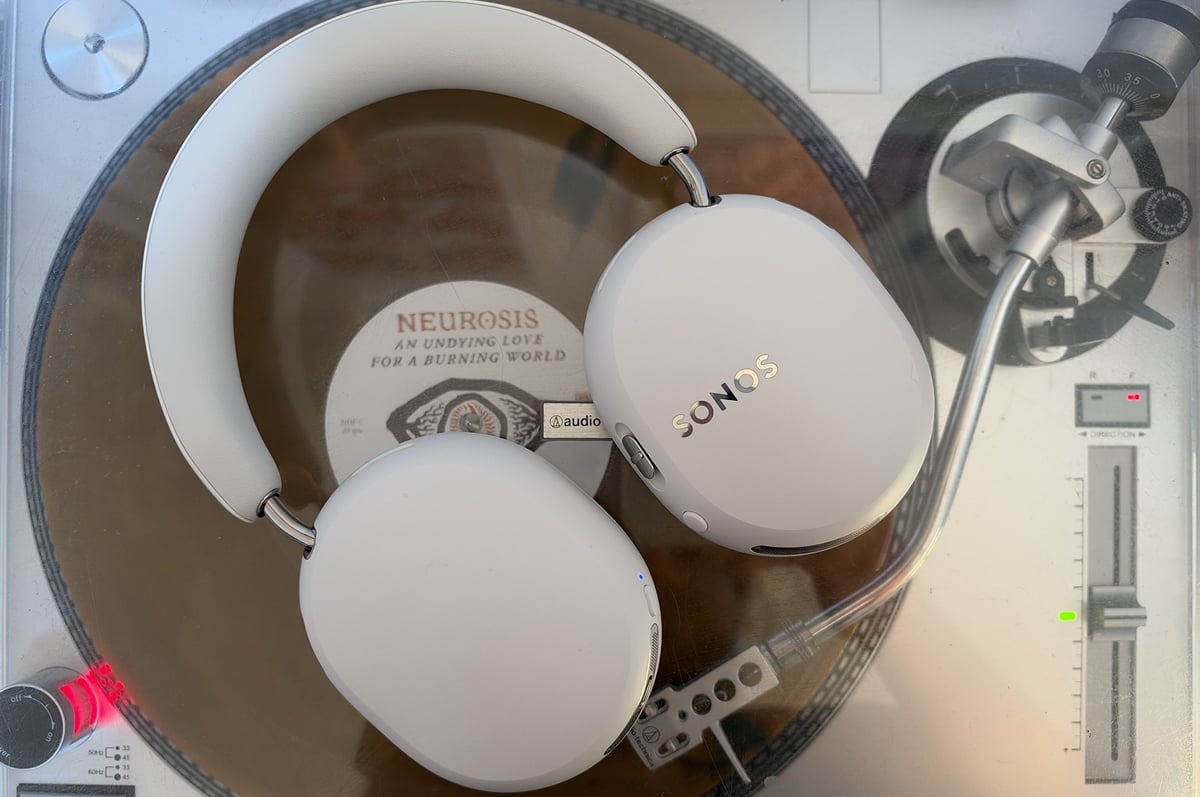
For me, the Sonos Ace Ultra solve a very specific first world problem. I have an extensive collection of hectic metal vinyls that don’t often get played for the sake of my partner’s sanity. I appreciate that earsplitting screams layered over dissonant guitars is not everyone’s idea of a fun time.
Unlike the original Sonos Ace, the Ace Ultra are fully ecosystem integrated. This, dubbed as “headphone linking”, enables cool tricks like sending audio from a Sonos-connected turntable directly to the headphones. And as aforementioned, I am a big fan of this.
The functionality itself can be a little weird though. To enable headphone linking you need a reasonably recent Sonos product in your home. These go as far back as the Sonos Move, Sonos Roam, and original Arc, so the requirements aren’t too strict, but worth noting. Older speakers like the Sonos One, the second-generation Play:5 and in my case, the Sonos Port, will still all work with headphone linking, provided you have one of the newer products in the same home setup.
Once you’re setup, you can use the main button - the “Content Key” - to move audio between the Sonos Ace Ultra and your other speakers. You can long press it to either send audio from the headphones to the nearest speaker, or to suck up audio from the speaker into the headphones.
This process works well enough, but there is a little bit of a lag between the audio moving between devices. In practice, I found it a little simpler just to use the Sonos app to set the audio sources for the Ace Ultra.
It’s also worth noting that this functionality is made for at home use. You have to be using the Sonos app to move audio around. You can’t, say, walk into your house streaming something through Apple Music or Spotify on your iPhone and then press the button to transfer the audio to your house. Similarly, you can’t take music you’re playing out of the house - as soon as you disconnect from your WiFi, the Sonos app shorts out.
But all in all, I love that this functionality exists. It is kinda niche, but it opens up interesting possibilities for anyone who’s bought into the Sonos ecosystem.

Otherwise, the Sonos Ace Ultra aren’t a huge departure from the original Sonos Ace, but that’s not a bad thing! The pair are still amongst the comfiest headphones I’ve tested, and are easy to wear for hours at a time. They’re premium in fit and feel, but never at the expense of wearability.
The Sonos Ace Ultra also have the same great physical controls found on the original Sonos Ace. The power button has its own home on the left cup, while the right cup houses playback controls and a noise cancellation toggle. The playback controls take the form of what Sonos calls the “Content Key” - a bespoke button that is also a slider. Sliding it up and down adjusts volume, but you can also press it to pause and resume your music. It’s a much nicer solution than the touch-based options that rivals often use. Give me a clicky button any day.
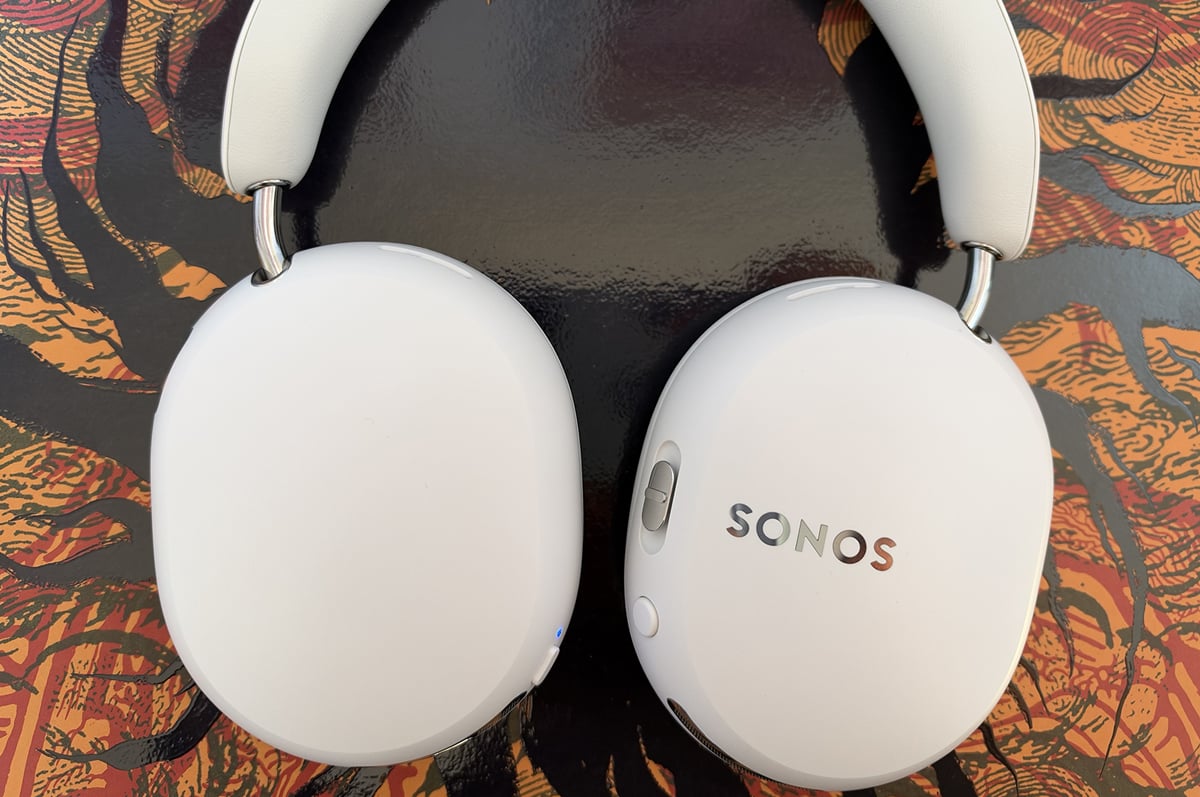
While the design is all but identical, Sonos has upgraded both sound quality and noise cancellation. On the noise cancellation front, the Sonos Ace Ultra do a good job of damping the sounds of your environment, but don’t block it out entirely. I could still hear some cabin noise through them on a flight, and my dog’s barks can still cut through even when I’m blasting heavy music. The Sonos Ace Ultra still do a solid job, but you can get better noise cancelling performance on rivals.
The Ace Ultra’s sound quality is a bit more refined, building on the fantastic foundation of the first generation model. Once again, they deftly handle the entire frequency spectrum, with a rounded sound. No matter what genre you’re into, the Sonos Ace Ultra will deliver a lovely listening experience. I’m happy to report that even the most chaotic of my metal - Blood Incantation, Neurosis, Converge, et al - comes through crisp and clear. If you want to tweak the sound, the Sonos Ace Ultra have a proper EQ in the Sonos app - something missing from original.
Battery life has also gotten a bit of a bump; Sonos says the Ace Ultra can last for up to 35 hours per charge, which is a five-hour boost over the previous model. That’s a solid step up over the 20 hours you get on the AirPods Max 2, but not quite as lofty as the 57 hours Sennheiser promises on its Momentum 5 over-ear headphones. Nonetheless, 35 hours is still more than enough for even the longest of flights, so this shouldn’t be an issue for most.
One other feature that hasn’t changed is the price. The Sonos Ace Ultra still retail for $699, which was the original launch pricing for their predecessor. Obviously that’s not cheap, but it’s nice that they haven’t gotten more expensive, and it’s roughly in line with what you’d pay for a high-end pair of Sony or Bose cans.
Sonos Ace Ultra - Final Thoughts
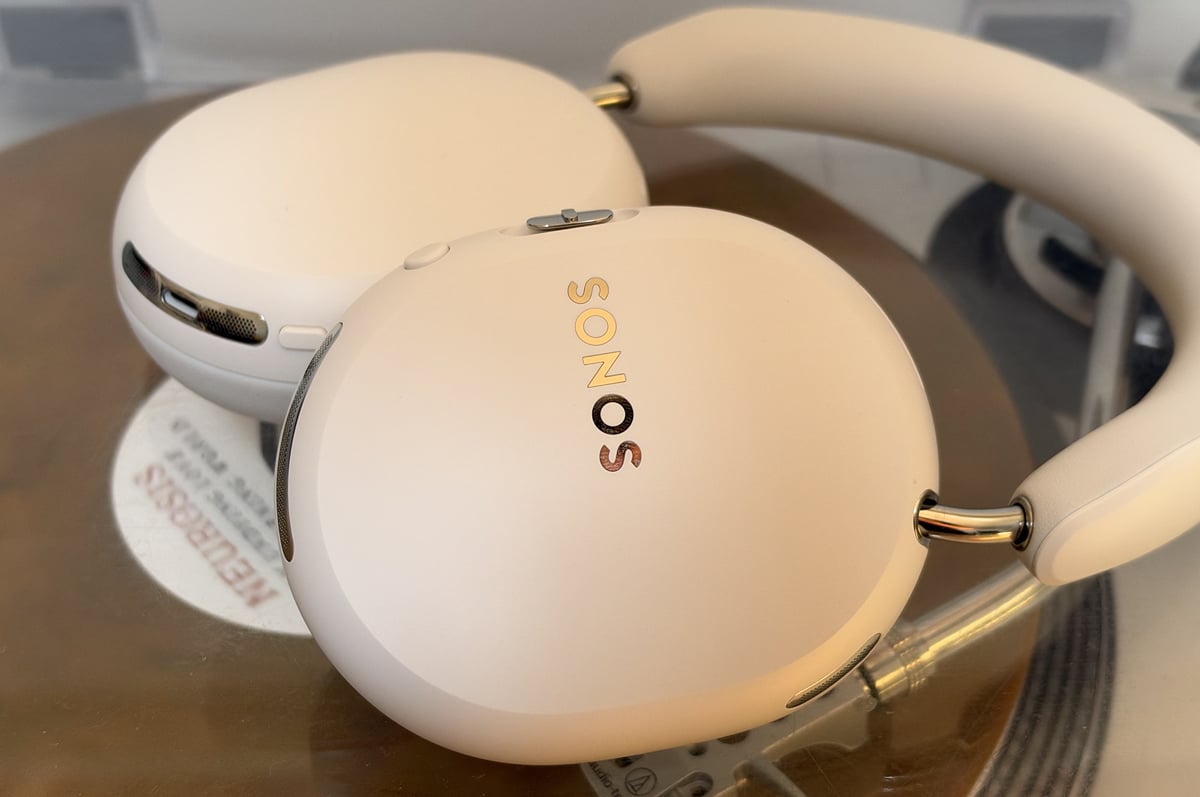
The Sonos Ace Ultra are arguably what the original Sonos Ace should have been: headphones that genuinely integrate with the broader Sonos ecosystem. While that integration could be a little more polished, the Ace Ultra are still the kind of product that neatly fit into my life - and I’m sure they’ll do the same for anyone else in a Sonos household.
If you’re all in on Sonos, the Ace Ultra are a compelling buy. And even if you’re not, they’re not a bad starting point.
Alex Choros

Related Articles